
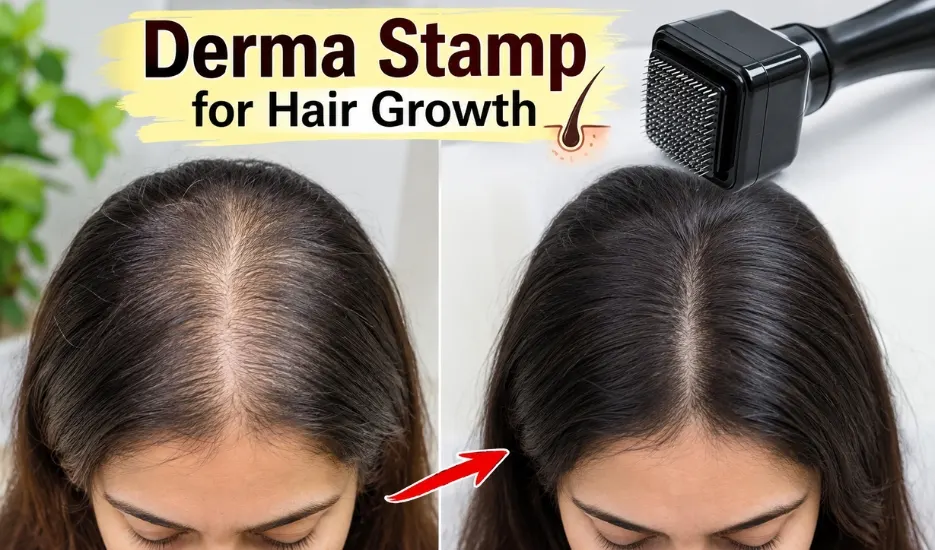
Derma Stamp for Hair Growth
Hair thinning and excessive hair fall have become common concerns for both men and women.
While shampoos, hair oils, and supplements may help improve overall hair health, many people are now turning to Derma Stamp for Hair Growth as part of their hair care routine.
This small microneedling device has gained popularity because it may help stimulate the scalp and support healthier, thicker-looking hair when used correctly.
Many people also combine a derma stamp with dermatologist-recommended treatments like minoxidil to improve product absorption.
Unlike temporary cosmetic solutions, a derma stamp works by creating tiny micro-channels in the scalp.
These microscopic punctures trigger the skin’s natural healing response, which may improve blood circulation around hair follicles and encourage healthier hair growth over time.
Although it isn’t a miracle cure for baldness, using a derma stamp consistently and safely may become a valuable part of an overall hair restoration plan.
What Is a Derma Stamp?
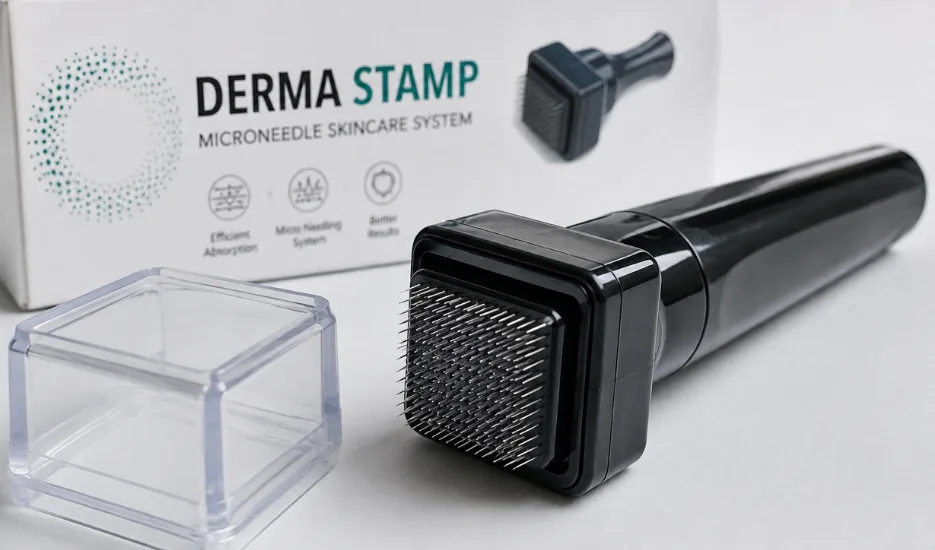
A Derma Stamp is a handheld microneedling device designed with dozens of tiny stainless steel or titanium needles arranged in a flat stamping head.
Instead of rolling across the scalp like a derma roller, the device is gently pressed straight down onto the skin.
This vertical stamping action creates uniform micro-channels while reducing unnecessary pulling or twisting of existing hair.
Because of this design, many dermatologists and hair restoration specialists prefer a derma stamp for treating areas affected by hair thinning.
How Does a Derma Stamp Work?
The tiny needles create controlled micro-injuries in the scalp.
Although this sounds intimidating, these microscopic punctures are part of the body’s natural repair process.
As healing begins, the scalp may experience:
- Improved blood circulation
- Increased collagen production
- Enhanced growth factor activity
- Better absorption of topical hair treatments
These changes may create a healthier environment for hair follicles.
For many people experiencing androgenetic alopecia, combining microneedling with prescribed treatments may improve results compared to topical treatments alone.
Why Is Derma Stamp Becoming So Popular?
Hair restoration technology has improved significantly over the past decade.
Today, many people prefer treatments that are:
- Minimally invasive
- Affordable
- Easy to perform at home
- Supported by emerging clinical research
A derma stamp meets all of these expectations.
Unlike expensive cosmetic procedures, it requires only a small investment and can become part of a regular scalp care routine when used correctly.
Benefits of Derma Stamp for Hair Growth
A derma stamp offers several potential benefits when used consistently and with proper hygiene.
1. May Stimulate Hair Follicles
Microneedling encourages the scalp’s natural healing response.
This process may activate dormant hair follicles and create a healthier environment for new hair growth.
2. Supports Thicker-Looking Hair
Many users notice that existing hair gradually appears denser and fuller after several months of consistent use.
Results vary from person to person, but improved scalp health may contribute to stronger-looking hair.
3. Improves Product Absorption
One of the biggest advantages of using a derma stamp is enhanced absorption of dermatologist-recommended topical treatments.
Micro-channels allow products such as prescribed hair growth solutions to penetrate the scalp more effectively.
4. Improves Blood Circulation
Healthy blood flow delivers oxygen and nutrients to hair follicles.
Microneedling may temporarily increase circulation around treated areas, helping support normal follicle function.
5. Easy to Use at Home
Unlike many professional procedures, a derma stamp can often be used at home when proper instructions and hygiene are followed.
However, larger needle sizes should generally be used only under professional supervision.
Quick Benefits Overview
| Benefit | How It Helps |
|---|---|
| Stimulates scalp | Supports healthier follicles |
| Improves circulation | Delivers nutrients more efficiently |
| Better serum absorption | Enhances topical treatment effectiveness |
| Supports thicker hair | May improve hair density over time |
| Easy home use | Simple weekly routine when used correctly |
Best Needle Size for Hair Growth
One of the most common questions beginners ask is:
“Which derma stamp needle size is best for hair growth?”
The answer depends on your experience, scalp condition, and treatment goals.
Using a needle that is too short may not stimulate the scalp effectively, while a needle that is too long can increase discomfort and should generally be reserved for professional use.
Derma Stamp Needle Size Guide
| Needle Size | Best For | Home Use |
|---|---|---|
| 0.25 mm | Better absorption of hair serums | ✅ Yes |
| 0.5 mm | Mild hair thinning and scalp stimulation | ✅ Most Recommended |
| 0.75 mm | Moderate hair thinning | ⚠️ Use carefully |
| 1.0 mm | Advanced microneedling | ⚠️ Prefer professional guidance |
| 1.5 mm | Clinical scalp treatments | ❌ Clinic use only |
For most people experiencing early hair thinning, 0.5 mm is often considered the best balance between effectiveness and comfort.
Which Needle Size Should Beginners Choose?
If you’re using a derma stamp for the first time, start with a 0.5 mm needle.
This size creates enough scalp stimulation without being overly aggressive for most users.
A 0.25 mm needle is better suited for improving the absorption of topical hair products rather than stimulating hair follicles.
Longer needles, such as 1.0 mm and 1.5 mm, should generally be used only under the supervision of a qualified dermatologist or trained professional.
How to Use a Derma Stamp for Hair Growth
Using a derma stamp correctly is just as important as choosing the right needle size.
Follow these simple steps to keep your scalp safe and maximize potential benefits.
Step 1: Clean the Derma Stamp
Before every session, disinfect the device by soaking the needles in 70% isopropyl alcohol for about 5–10 minutes.
Allow it to air dry completely on a clean surface.
Never use a dirty derma stamp.
Step 2: Wash Your Scalp
Wash your hair with a gentle shampoo to remove excess oil, dirt, and styling products.
Your scalp should be clean and completely dry before treatment.
Step 3: Divide the Hair
Separate your hair into small sections so you can easily reach thinning areas.
This also helps avoid unnecessary pulling of healthy hair.
Step 4: Stamp Gently
Place the derma stamp vertically on the scalp and press gently.
Lift the device straight up before moving to the next area.
Avoid dragging or sliding it across the scalp.
Cover the treatment area evenly without repeatedly stamping the exact same spot.
Step 5: Clean the Device Again
After finishing your session:
- Rinse the derma stamp with clean water.
- Disinfect it again using isopropyl alcohol.
- Let it dry completely.
- Store it in its protective case.
Proper cleaning helps reduce the risk of infection.
How Often Should You Use a Derma Stamp?
The ideal frequency depends on the needle length.
| Needle Size | Suggested Frequency |
|---|---|
| 0.25 mm | 2–3 times per week |
| 0.5 mm | Once every 7–10 days |
| 0.75 mm | Every 2 weeks |
| 1.0 mm | Every 3–4 weeks (professional guidance recommended) |
Using a derma stamp too frequently does not produce faster results.
Your scalp needs time to recover between sessions.
Can You Apply Minoxidil After Using a Derma Stamp?
Many people combine a derma stamp with minoxidil as part of a hair restoration routine.
However, applying minoxidil immediately after microneedling may increase irritation because the scalp has tiny micro-channels.
Some dermatologists recommend waiting several hours—or even up to 24 hours, depending on the needle size and individual sensitivity—before applying topical products.
If you’re using prescription treatments, follow your dermatologist’s instructions rather than a generic schedule.
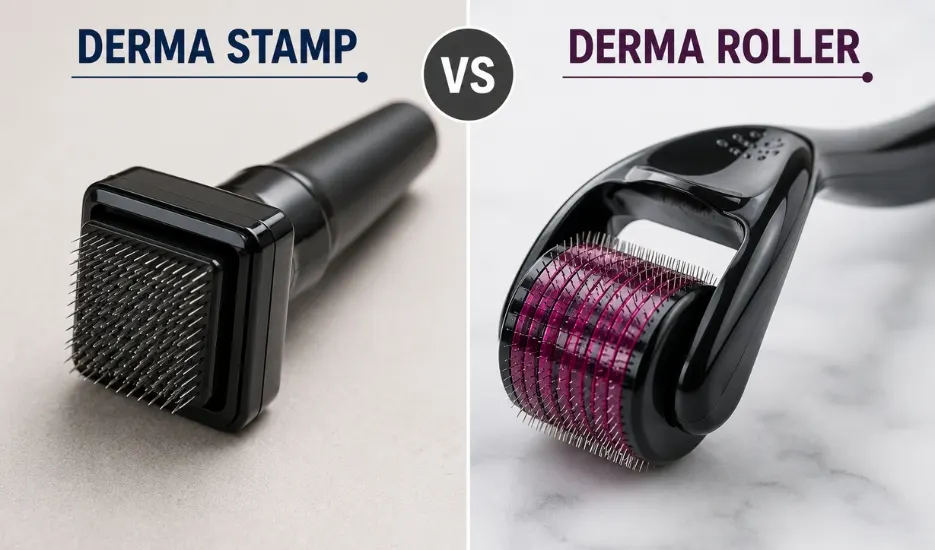
Derma Stamp vs Derma Roller
Both devices use microneedles, but they work differently.
| Derma Stamp | Derma Roller |
|---|---|
| Vertical stamping motion | Rolling motion |
| Less hair pulling | May pull longer hair |
| Better precision | Covers larger areas quickly |
| Easier to target bald spots | Less precise |
| Often preferred for scalp use | Common for skin treatments |
| Buy Now | Buy Now |
Because the needles move straight in and out, many users find a derma stamp more comfortable for treating thinning areas on the scalp.
Common Mistakes to Avoid
Even a good device won’t deliver the best results if it’s used incorrectly.
Avoid these common mistakes:
Using a Dirty Device
Always disinfect the derma stamp before and after every session.
Pressing Too Hard
The goal is controlled micro-needling—not deep punctures.
Gentle, even pressure is enough.
Using It Too Often
Overusing the device may irritate the scalp and delay recovery.
Allow enough time between sessions.
Sharing the Device
A derma stamp is a personal hygiene tool.
Never share it with anyone else.
Ignoring Scalp Problems
Avoid microneedling if you have:
- Active scalp infections
- Open wounds
- Severe dandruff flare-ups
- Psoriasis
- Eczema affecting the scalp
Consult a dermatologist before starting treatment.
When Will You See Results from a Derma Stamp?
One of the biggest questions people have before starting microneedling is:
“How long does a derma stamp take to work?”
The answer depends on several factors, including the cause of your hair loss, your age, genetics, scalp health, and how consistently you follow your treatment routine.
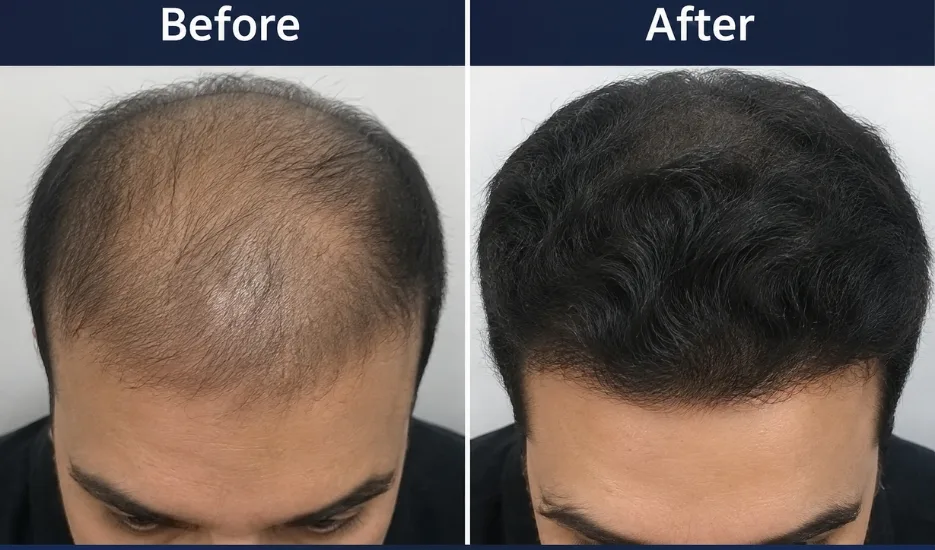
A derma stamp is not an overnight solution. Hair grows slowly, so patience and consistency are essential.
Most people notice gradual improvements rather than dramatic changes within a few weeks.
Typical Hair Growth Timeline
Everyone responds differently, but this general timeline gives realistic expectations.
| Time | What You May Notice |
|---|---|
| 2–4 Weeks | Scalp feels healthier, reduced irritation, improved product absorption |
| 1–3 Months | Less hair shedding and healthier-looking existing hair |
| 3–6 Months | Baby hairs may begin appearing in thinning areas |
| 6–12 Months | Better hair density and thicker-looking hair with consistent routine |
Remember, results vary from person to person.
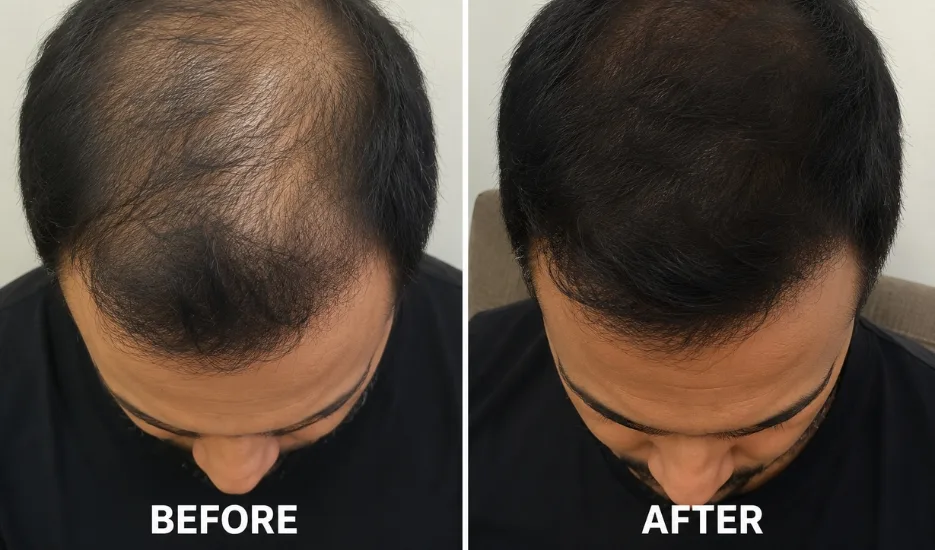
Before and After: What Results Should You Expect?
Photos shared online often show dramatic transformations, but it’s important to have realistic expectations.
A Derma Stamp for Hair Growth works by creating a healthier scalp environment.
It supports hair follicles that are still alive, but it cannot bring back follicles that have been permanently damaged or destroyed.
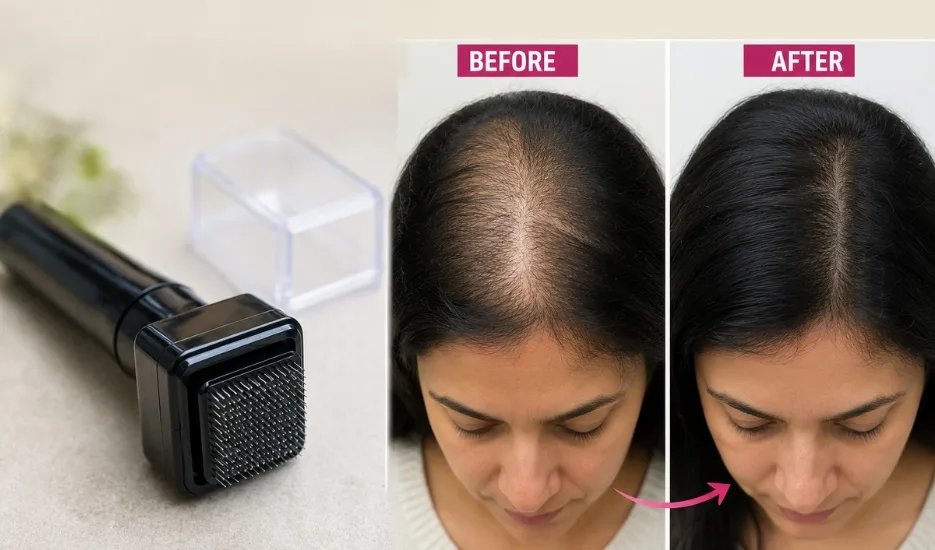
Many users notice improvements such as:
- Reduced hair shedding
- Healthier scalp
- Stronger hair strands
- Improved hair density
- New baby hairs in thinning areas
- Better response to topical treatments
Visible improvements usually happen gradually over several months.
Realistic Before & After Expectations
| Before | After (With Consistent Use) |
|---|---|
| Visible scalp through thinning hair | Better scalp coverage |
| Weak, thin hair | Stronger-looking strands |
| Uneven hair density | Fuller appearance |
| Poor serum absorption | Improved absorption of topical products |
| Excessive hair shedding | Hair fall may reduce over time |
Is Derma Stamp Safe?
When used correctly and hygienically, a derma stamp is generally considered safe for many people.
However, safety depends on:
- Using the correct needle size
- Keeping the device sterile
- Following proper technique
- Allowing the scalp enough recovery time
Improper use increases the risk of irritation or infection.
Possible Side Effects
Most side effects are temporary and mild.
Some people experience:
- Mild redness
- Slight tenderness
- Temporary scalp sensitivity
- Mild swelling
- Tingling sensation
These symptoms usually improve within 24–48 hours.
If you notice severe pain, pus, excessive swelling, or signs of infection, stop using the device and consult a healthcare professional.
Who Should Avoid Using a Derma Stamp?
Although microneedling is suitable for many people, it isn’t appropriate for everyone.
Avoid using a derma stamp if you have:
- Active scalp infection
- Open wounds
- Severe dandruff flare-up
- Psoriasis on the scalp
- Eczema affecting the scalp
- Skin cancer on the scalp
- Recent scalp surgery
Pregnant or breastfeeding individuals should consult their healthcare provider before starting any new scalp treatment.
How to Clean a Derma Stamp Properly
Cleaning the device is one of the most important steps in preventing infection.
Before Each Use
- Wash your hands thoroughly.
- Soak the needles in 70% isopropyl alcohol for 5–10 minutes.
- Allow the device to air dry.
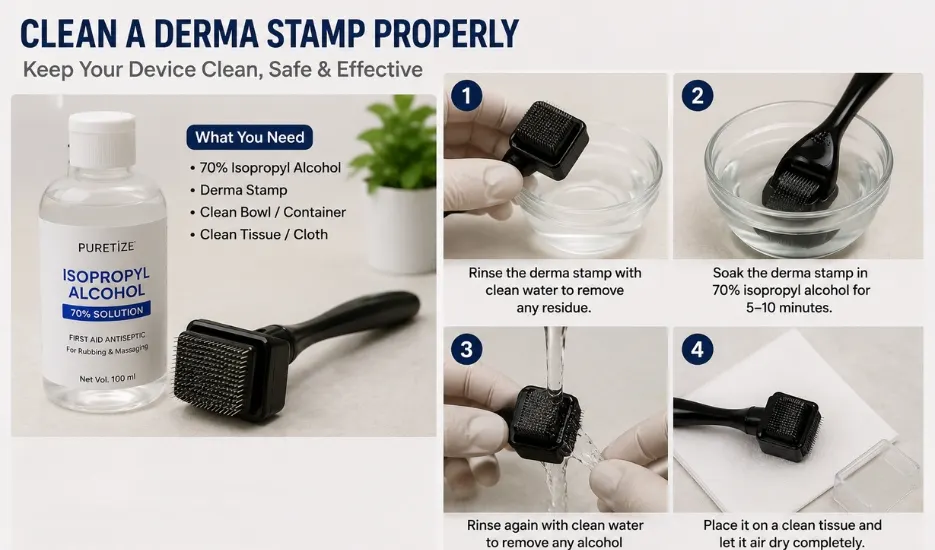
After Each Use
- Rinse away any residue with clean water.
- Disinfect again with alcohol.
- Let it dry completely.
- Store it in its protective case.
Never put a wet derma stamp into a closed container.
How Long Does a Derma Stamp Last?
The needles become dull with repeated use.
For home users, replacing the device after approximately 15–25 sessions (or according to the manufacturer’s instructions) helps maintain effectiveness and hygiene.
If the needles appear bent, damaged, or rusty, replace the device immediately.
Tips for Better Results
Consistency matters more than aggressive treatment.
To support healthier hair growth:
- Follow a regular microneedling schedule.
- Eat a balanced, protein-rich diet.
- Sleep 7–8 hours each night.
- Manage stress through exercise or meditation.
- Avoid smoking.
- Use dermatologist-recommended hair treatments when appropriate.
Healthy daily habits work together with scalp care for the best long-term results.
Common Mistakes That Slow Progress
Avoid these mistakes if you’re hoping for better hair growth.
| Mistake | Why It’s a Problem |
|---|---|
| Using too much pressure | May damage the scalp unnecessarily |
| Skipping cleaning | Increases infection risk |
| Using the wrong needle size | Reduces effectiveness or increases irritation |
| Expecting instant results | Hair growth takes several months |
| Inconsistent routine | Slows overall progress |
| Sharing the device | Can spread bacteria and infections |